Cobra · Dev
The invoice agent goes to production: autonomous on Scaleway
Context
The supplier invoice processing agent had been fully scoped on the design side: multi-agent architecture, line-by-line matching against the purchase order, Teams Adaptive Cards. The essential part was left: getting it to run on its own, off my computer. That's done — it's in production on Scaleway.
The real trigger: Odoo has been in place since February 2025, but the purchase order → invoice → payment chain was never applied properly. Measured read-only against the database: 1,524 invoices (≈ €2M) entered with no link to any purchase order, and 241 unpaid for more than 2 months (€600k). The cost of human drift — exactly what the agent is meant to keep from happening again.
What went to production
- Autonomous hosting: Scaleway instance (
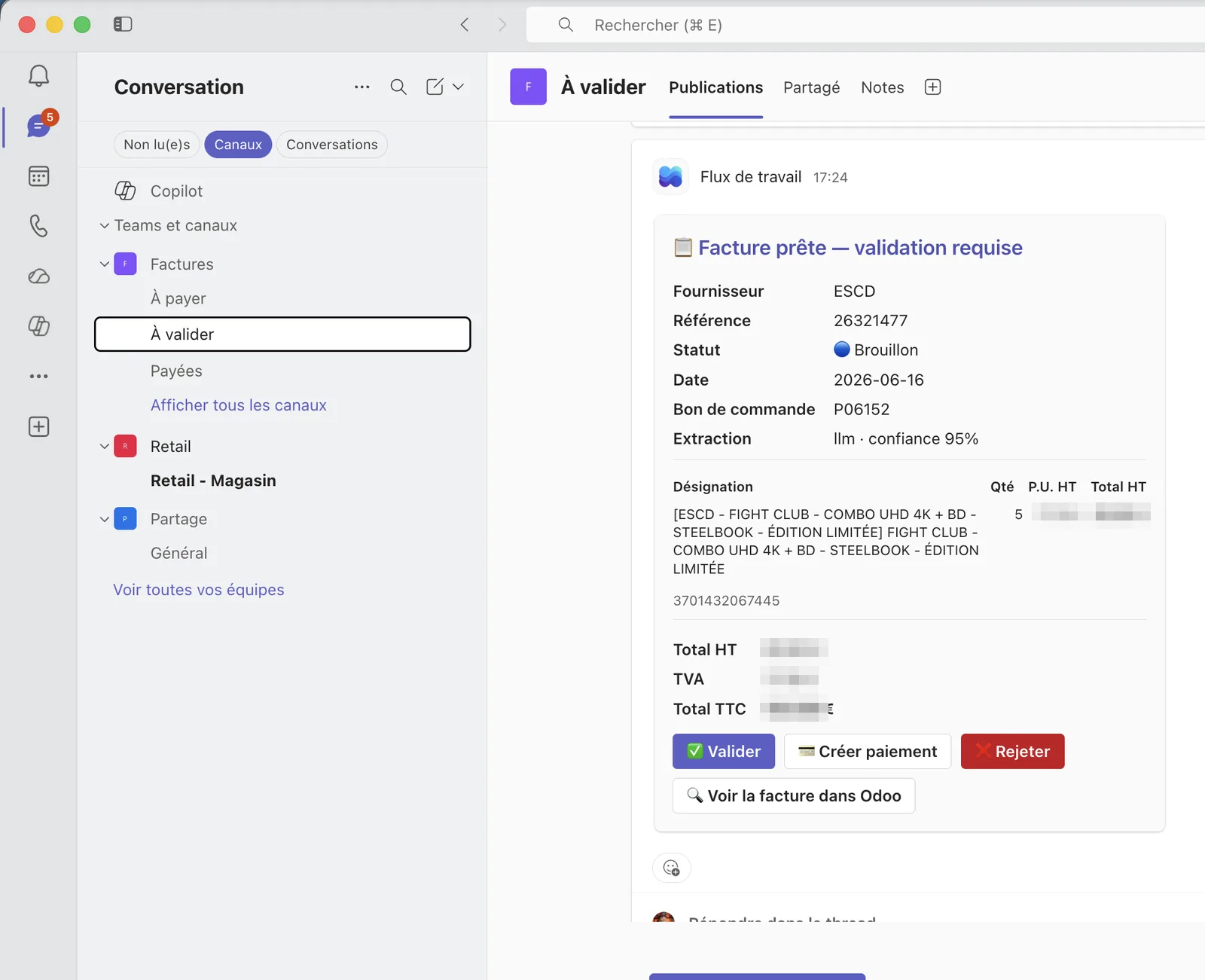
BASIC3-X2C-4GVM, Paris region, ~€36/month). The agent exists outside my workstation. - Cron every 15 min: read email → extraction (OCR + Claude API, Opus 4.8 model) → line-by-line matching against the Odoo purchase order → Teams card. A Flask endpoint running as a systemd service receives approval clicks and writes to Odoo.
- Reading email at the source via Microsoft Graph (application flow) — no IMAP. That's what makes the agent truly autonomous: no need to forward it anything anymore.
- Linking guaranteed by design: every invoice line created points to the exact purchase order line (native Odoo 3-way match). The agent can't create a "free" invoice. Duplicate prevention + block if price gap > 5%.
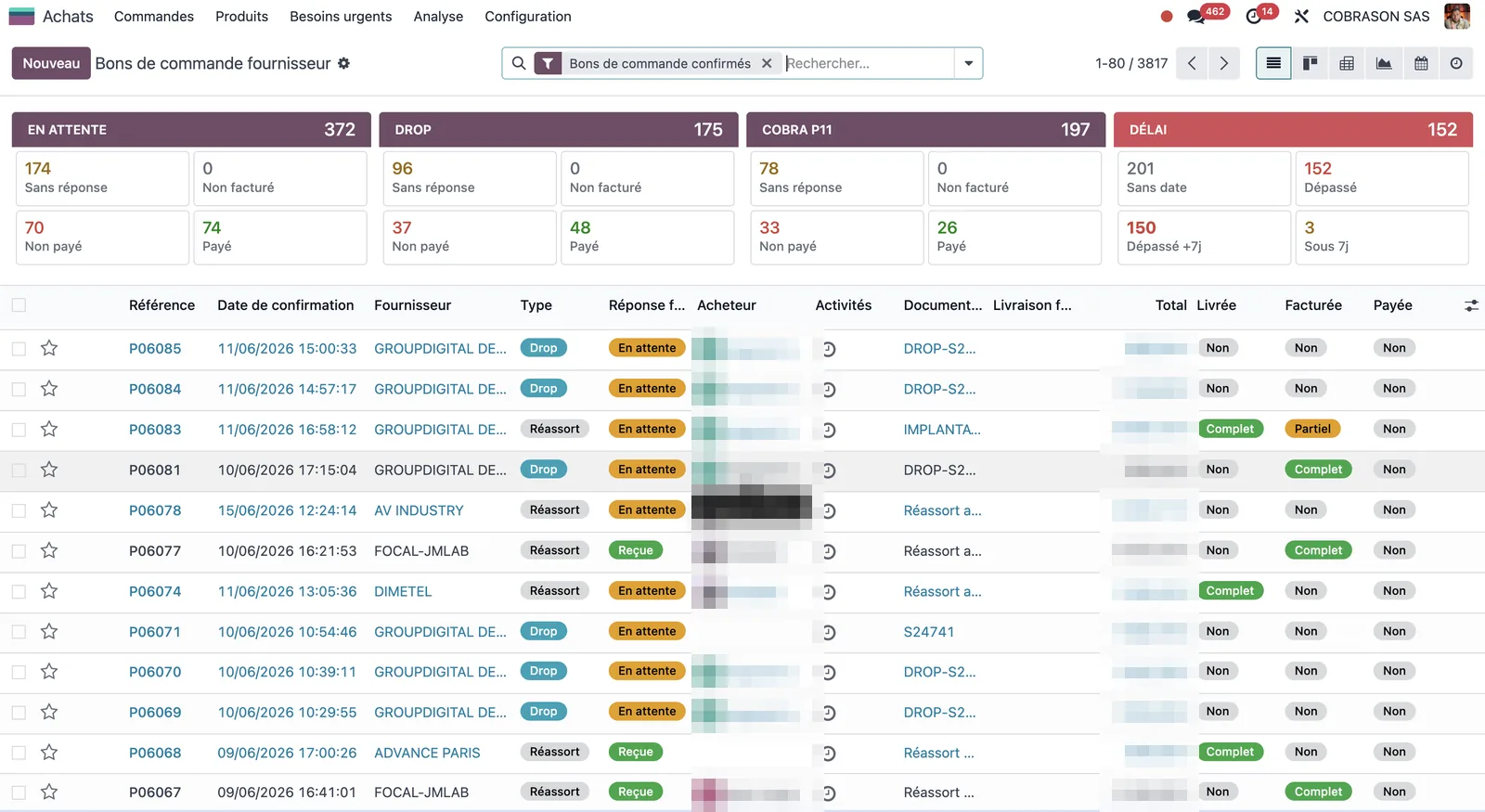
- Chain visibility: 3 statuses added on the supplier purchase order (Delivered / Invoiced / Paid) + 3 Teams sub-channels (To approve / To pay / Paid) that mirror the Odoo payment state. Since Cobra carries almost no supplier payables, this invoiced/paid tracking isn't accounting comfort: it's cash-flow management.
Results & figures
On ~80 invoices/week (measured volume), human time drops from ~12 hrs/week (manual entry + checking + reconciliation) to ~2-2.5 hrs (approving cards + handling the cases that need intervention) — that's ~9-10 hrs/week saved. Until now this role took up a full-time position, of which only about ten hours were actually productive.
But the real win isn't time: 100% of what the agent creates is linked to its purchase order and price-checked. It doesn't clean up the past (the ~€2M of detached invoices remain a cleanup project) — it guarantees the future stays clean.
What's fair to say
- The agent does not do reconciliation / bank matching: payment and the SEPA batch stay human. It brings visibility, not execution.
- The Teams cards don't update "in place" (a Power Automate webhook limitation): each state change posts a new mirror card. Live-update via a Teams bot is the next step.
- Secrets live in a protected
.envon the instance, not yet in a dedicated vault — first hardening on the list.
Stack
Python 3.14, Claude API (Opus 4.8), pdfplumber + Tesseract OCR (fr/en) + Poppler, pydantic, Flask (HMAC), Adaptive Cards v1.5 via Power Automate, Microsoft Graph, Odoo 18 Enterprise (XML-RPC: account.move, account.move.line, purchase.order, product.supplierinfo, account.payment), Scaleway instance (cron + systemd).